Best Cadillac for Towing a Boat or Trailer
Pulling a boat to the lake or taking a travel trailer on a weekend trip requires more than simply choosing a luxury SUV with a hitch.
Cadillac towing capacity varies significantly by model, configuration, drivetrain, passenger load, and factory equipment, which makes choosing the right vehicle especially important for owners who plan to tow regularly.
For serious towing, the Cadillac Escalade is the standout conventional Cadillac SUV. Current Escalade models can offer up to 8,100 pounds of maximum towing capacity when properly equipped, while smaller Cadillac crossovers are better suited to lighter boats, utility trailers, and recreational equipment.
Cadillac’s SUV lineup covers a wide range of towing needs. An owner pulling a lightweight utility trailer has very different requirements from someone towing a 6,000-pound boat and trailer combination.
Cadillac lists the 2026 Escalade at up to 8,100 pounds of maximum towing capacity when properly equipped. Cadillac also states that the 2026 Escalade can tow up to 8,100 pounds in RWD configuration or 7,900 pounds with 4WD.
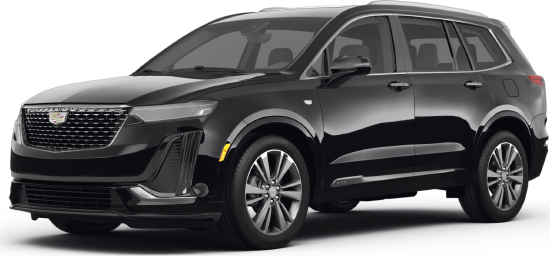
The XT6 occupies a useful middle ground. Cadillac’s 2025 specifications list the available 3.6-liter V6 at 310 horsepower and 271 lb-ft of torque, with a maximum towing capacity of up to 4,000 pounds when properly configured.
| Cadillac Model | Approximate Maximum Towing Capacity | Typical Towing Use |
|---|---|---|
| Cadillac Escalade | Up to 8,100 lbs. | Larger boats, campers, enclosed trailers |
| Cadillac Escalade ESV | Up to 8,000 lbs., depending on configuration | Boats, campers, trailers plus additional cargo |
| Cadillac Escalade-V | Up to 7,200 lbs. | Recreational trailers and boats |
| Cadillac XT6 | Up to 4,000 lbs. when properly equipped | Smaller boats, lightweight campers, utility trailers |
Maximum figures are not universal ratings for every example of a particular model. Cadillac specifically advises owners to review the trailering section of the owner’s manual because passengers, cargo, options, and vehicle configuration can reduce how much a particular vehicle can safely tow.
A maximum tow rating is useful for comparison shopping, but it does not tell the entire story. Trailer weight, tongue weight, vehicle payload, passengers, luggage, accessories, hitch equipment, and weight distribution all affect a towing setup.
Boat owners should pay particular attention to loaded trailer weight. A boat’s published dry weight generally does not represent everything that will be rolling down the highway once the trailer, fuel, batteries, equipment, coolers, fishing gear, and other supplies are included.
Payload matters as well. Tongue weight presses down on the tow vehicle and becomes part of the load the Cadillac must carry along with its occupants and cargo.
That distinction is why towing at the vehicle’s advertised maximum without calculating the actual loaded weights can create problems. Owners should consult the specific vehicle’s owner’s manual, certification labels, hitch ratings, and trailer specifications before towing.
Escalade’s body-on-frame architecture and V8 power make it much better suited to substantial towing than Cadillac’s smaller crossovers. The standard Escalade’s 6.2-liter V8 produces 420 horsepower and 460 lb-ft of torque, according to Cadillac.
Luxury does not eliminate practical trailering equipment, either. Cadillac lists features including Hitch Guidance with Hitch View, an in-vehicle trailering app, customizable trailer profiles, and HD Surround Vision on applicable Escalade configurations.
Those technologies can make connecting and monitoring a trailer easier, particularly for drivers who tow boats that must regularly be backed down narrow launch ramps.
Not every owner needs an Escalade. An XT6 with the appropriate engine and towing equipment can be a more manageable choice when the trailer remains comfortably within its limits.
Cadillac rates properly configured XT6 models with the 3.6-liter V6 for up to 4,000 pounds. That can accommodate some smaller boats and recreational trailers, but actual loaded trailer weight needs to be verified rather than estimated.
Leaving additional capacity between the actual loaded trailer weight and the vehicle’s limits can also make planning for passengers, cargo, and equipment easier.
Regular towing puts additional demands on a vehicle. Engines work harder, transmissions handle greater loads, brakes convert more energy into heat, and suspension components support additional weight.
A warning light, overheating condition, unusual transmission behavior, vibration, or braking complaint should therefore be diagnosed before the vehicle is used for another substantial towing trip.
Repair prices vary widely by vehicle, location, labor rate, diagnosis, and the component involved. The following ranges are broad planning estimates rather than Cadillac-specific quotes.
| Towing-Related Service or Repair | Approximate Cost Range |
|---|---|
| Diagnostic inspection | $100-$250 |
| Brake service | $300-$1,200+ |
| Cooling-system repair | $250-$1,500+ |
| Suspension component repair | $300-$2,000+ |
| Transmission-related repair | $500-$6,000+ |
| Hitch or trailer-wiring diagnosis | $100-$500+ |
A relatively inexpensive cooling-system problem can become a major repair if an overheating vehicle continues pulling a heavy trailer. Likewise, transmission slipping or harsh shifting under load should not be dismissed simply because the SUV seems normal when driven without a trailer.
Preventive maintenance becomes more important when a Cadillac frequently tows. Start with the maintenance schedule and trailering instructions for the exact model and model year rather than relying on generic intervals.
Check engine oil, coolant, transmission behavior, brake condition, and tire pressures before long towing trips. Trailer tires, wheel bearings, lights, wiring, brakes, coupler hardware, and safety chains also deserve inspection because the tow vehicle is only one part of the combination.
Pay close attention to tire load ratings and inflation pressures. Towing adds load and heat, and an improperly inflated tire can become a much bigger concern when the vehicle is carrying passengers while pulling a trailer.
Boat owners should also inspect electrical connections after repeated exposure to water and boat ramps. Corrosion or damaged wiring can interfere with trailer lights or electric braking equipment.
Service records are valuable for vehicles that tow frequently. Documenting fluid changes, brake work, cooling-system service, and inspections can help an owner spot patterns before a minor issue becomes an expensive failure.
Cadillac towing capacity itself should not be a reason for concern when the vehicle, trailer, equipment, and load are correctly matched. The bigger issue is treating the maximum tow rating as the only number that matters.
A driver who occasionally pulls a lightweight utility trailer may never approach the limits of an XT6. Someone regularly towing a substantial boat, enclosed trailer, or travel trailer will generally need the greater capability of an Escalade.
Owners should also consider how much weight they carry inside the SUV. A family of five with luggage, coolers, pets, and recreational equipment can use a meaningful portion of available payload before the trailer is connected.
For used Cadillac shoppers, inspect any SUV that appears to have towed extensively. Look at hitch condition, wiring, brakes, tires, cooling-system history, transmission operation, and maintenance documentation.
A Technical Service Bulletin, commonly called a TSB, is a manufacturer communication that can provide technicians with information about known symptoms, diagnostic procedures, service updates, or repair guidance. A TSB is not automatically the same thing as a safety recall.
Owners can search manufacturer communications and TSB information through the NHTSA recall and safety database by entering the vehicle’s year, make, and model. NHTSA confirms that manufacturer communications, including bulletins, are available through its vehicle search tools.
Checking these resources can be particularly useful when shopping for a used Cadillac or investigating a recurring towing-related symptom.
Start with the trailer rather than the SUV. Determine its realistic loaded weight and tongue weight, then compare those figures with the limits for the exact Cadillac configuration being considered.
| Towing Situation | Cadillac Worth Considering |
|---|---|
| Small utility trailer | XT6 or another appropriately rated Cadillac |
| Lightweight boat | Properly equipped XT6 |
| Medium boat and trailer | Escalade |
| Larger recreational trailer | Escalade |
| Trailer plus substantial passenger and cargo needs | Escalade or Escalade ESV |
| Electric luxury SUV towing | Escalade IQL, depending on range and trailer requirements |
For shoppers considering electric power, Cadillac says the 2026 Escalade IQL can tow up to 7,500 pounds. EV towing adds another consideration because trailer weight, speed, terrain, weather, and HVAC use can materially affect driving range.
Regardless of model, confirm the rating for the actual VIN and equipment package before buying specifically for towing.
Among current conventional Cadillac SUVs, the standard Escalade offers up to 8,100 pounds of maximum towing capacity when properly equipped. Configuration matters, so owners should verify the specifications for the exact vehicle.
Yes, many boats fall within the Escalade’s towing range. Cadillac specifically identifies midsize boats and personal watercraft among the types of loads compatible with the Escalade’s available towing capability, but actual boat, trailer, fuel, gear, passenger, and cargo weights must still be calculated.
Cadillac lists a maximum towing capacity of up to 4,000 pounds for properly equipped XT6 models with the available 3.6-liter V6. Always verify the rating for the specific model year and configuration.
Passenger and cargo weight can affect how much a vehicle can tow. Cadillac specifically notes that passengers, cargo, and vehicle options may reduce available trailering capacity, making payload calculations important when traveling with a full cabin.
Both offer substantial capability. The standard 2026 Escalade reaches up to 8,100 pounds in the appropriate configuration, while Cadillac lists the Escalade ESV at up to 8,000 pounds in certain configurations. The ESV’s additional cargo room may be attractive to families carrying substantial gear, while the standard Escalade provides the highest published maximum tow figure.
Towing can make a Cadillac considerably more useful, but it also places additional demand on expensive mechanical and electronic systems. Transmission components, cooling systems, suspension hardware, electronics, and other systems can become costly to repair as a vehicle accumulates mileage.
An extended vehicle service plan can help eligible owners manage the financial uncertainty associated with certain covered repairs after applicable original warranty coverage ends. Coverage varies by plan, vehicle, mileage, eligibility, exclusions, and contract terms, so owners should review the actual agreement before purchasing.
Granger Warranty provides extended coverage options with straightforward online pricing and a process designed to make comparing plans easier. Cadillac owners who plan to keep their SUV through years of boating, camping, or recreational towing can explore available coverage at Granger Warranty and compare options based on their vehicle and ownership plans.
A properly matched Cadillac and trailer can provide years of comfortable towing. Choosing enough capacity, maintaining the vehicle carefully, and planning for potential repair expenses can make those miles much easier to enjoy.
Stay up to date with the latest news from Granger Warranty