Best Chevrolet Colorado Model Year to Buy Used: Second Gen vs Third Gen
Shopping for a used Chevrolet Colorado presents an interesting dilemma, particularly now that buyers can choose between two distinctly different generations of Chevy's popular midsize pickup.
The second-generation Colorado offers proven engine options, relatively affordable pricing, and a traditional truck-driving experience, while the third-generation model introduces a more powerful turbocharged engine, updated technology, and a substantially redesigned interior.
Determining the best Chevy Colorado year to buy used requires looking beyond mileage and asking how each generation compares in reliability, maintenance costs, mechanical complexity, and long-term ownership value. Although both generations have compelling advantages, certain model years offer a particularly attractive combination of equipment, dependability, and depreciation.
For buyers considering a used Chevy Colorado, understanding these differences can help prevent expensive surprises while identifying the trucks most likely to deliver years of dependable service.
Chevrolet introduced the second-generation Colorado for the 2015 model year, bringing the midsize pickup back to the American market after a brief absence. Produced through 2022, this generation became popular among buyers who wanted genuine truck capability without the larger dimensions, higher purchase prices, and operating costs associated with a full-size Silverado.
The second-generation Colorado offered several powertrain configurations, including a 2.5-liter four-cylinder gasoline engine, a 3.6-liter V6, and an available 2.8-liter Duramax turbodiesel. Depending on the model year and engine, buyers could choose between manual and automatic transmissions, with rear-wheel drive or four-wheel drive available across much of the lineup.
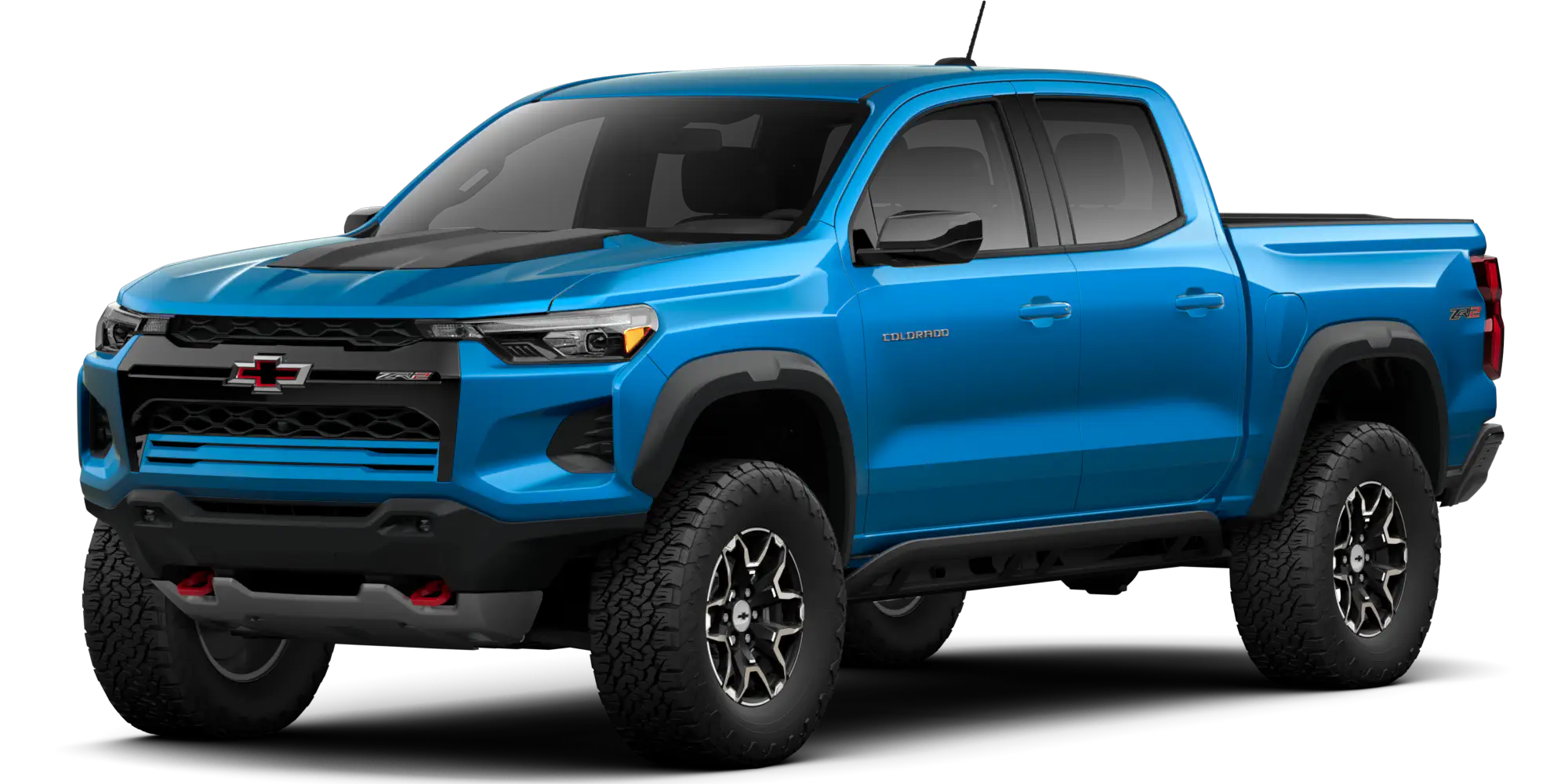
For 2023, Chevrolet introduced the third-generation Colorado with an entirely redesigned platform, a more sophisticated cabin, and a simplified engine lineup centered on a 2.7-liter turbocharged four-cylinder. The redesign also brought improved off-road capability, updated infotainment systems, and more advanced driver-assistance technology.
The differences between these generations extend well beyond styling, making model-year selection especially important for buyers planning to keep their trucks well beyond the original warranty period.
| Category | Second Generation Colorado | Third Generation Colorado |
|---|---|---|
| Model Years | 2015-2022 | 2023-Present |
| Gasoline Engines | 2.5L I4, 3.6L V6 | 2.7L Turbo I4 |
| Diesel Availability | 2.8L Duramax | Not Available |
| Transmission Options | Manual or Automatic, Depending on Configuration | 8-Speed Automatic |
| Interior Technology | Traditional Controls, Smaller Displays | Larger Digital Displays, Updated Infotainment |
| Maximum Towing Capacity | Up to 7,700 Pounds | Up to 7,700 Pounds |
| General Used-Market Position | More Affordable | Higher Purchase Prices |
| Best Buyer Profile | Value-Focused Owners | Technology and Performance Buyers |
Specifications and towing capacities vary by model year, drivetrain, engine, and equipment.
For shoppers prioritizing affordability and an established ownership history, the second-generation Colorado deserves serious consideration. Its lengthy production run provides buyers with a broad selection of configurations, making it easier to find a truck that matches their budget and intended use.
The 2019 through 2022 model years are particularly attractive because they represent the later stages of the generation, when Chevrolet had already made several mechanical and equipment updates. These trucks also benefit from a more familiar maintenance environment, with independent repair shops generally experienced in servicing their engines, transmissions, and four-wheel-drive systems.
Among these, the 2021 and 2022 Chevrolet Colorado models stand out as particularly sensible used purchases. They combine relatively modern infotainment features with established powertrains, while avoiding the higher acquisition costs typically associated with the redesigned third-generation trucks.
Earlier examples should not automatically be dismissed, especially when accompanied by comprehensive maintenance records. A well-maintained 2017 Colorado with reasonable mileage can still represent better value than a neglected 2022 model, reinforcing the importance of evaluating individual vehicle condition rather than relying exclusively on model-year rankings.
The third-generation Colorado represents a significant improvement in performance, interior presentation, and everyday usability. Its turbocharged 2.7-liter four-cylinder produces substantially more torque than the outgoing naturally aspirated V6 in many configurations, giving the truck confident acceleration and strong towing performance.
For 2023, Chevrolet offered different output versions of the turbocharged engine, while later models moved toward a more standardized high-output configuration. This powertrain provides excellent low-end torque, although its turbocharger, direct-injection system, and electronic controls introduce additional components that buyers should consider when evaluating long-term maintenance costs.
The redesigned cabin is another major advantage, featuring a large central touchscreen, digital instrumentation, and more integrated vehicle controls. Buyers who prioritize modern connectivity, driver assistance, and a contemporary driving experience may find these improvements sufficient to justify the higher price.
From a used-vehicle perspective, 2024 and newer Colorado models deserve attention because they offer the benefits of the redesign without being the initial launch-year version. That does not establish them as more reliable, however, since long-term durability data remains less extensive than for the second generation.
Although the Colorado has developed a loyal following, neither generation is immune to mechanical problems. Understanding potential trouble areas is particularly important when purchasing a higher-mileage truck or one with an incomplete service history.
Second-generation models equipped with certain eight-speed automatic transmissions have attracted owner complaints involving harsh shifts, hesitation, and torque-converter shudder. Not every truck experiences these symptoms, but a thorough test drive should include steady-speed cruising, light acceleration, and repeated gear changes under different driving conditions.
Some V6-equipped trucks may also develop ignition, cooling-system, or engine-related problems as mileage accumulates. Diesel models introduce additional maintenance considerations involving emissions equipment, exhaust aftertreatment systems, and specialized components that can be expensive to repair outside warranty coverage.
Third-generation trucks have a different risk profile because they rely more heavily on integrated electronics, digital interfaces, and turbocharged engine technology. Prospective buyers should verify that infotainment systems, driver-assistance features, cameras, and electronic controls function correctly before completing a purchase.
A Technical Service Bulletin, commonly called a TSB, is a manufacturer-issued document that provides dealership technicians with diagnostic information, updated repair procedures, or guidance for addressing known vehicle conditions. Unlike a safety recall, a TSB does not automatically mean the manufacturer will pay for the repair, and its existence does not establish that every vehicle is affected. Buyers can research manufacturer communications, complaints, investigations, and recalls through the National Highway Traffic Safety Administration by searching for a specific Chevrolet Colorado model year or entering the vehicle identification number.
One of the biggest advantages of purchasing a used midsize pickup is the potential savings compared with buying new. Those savings can disappear quickly, however, when a truck requires major transmission, engine, or electronic repairs.
Repair expenses depend heavily on model year, drivetrain, labor rates, and whether the vehicle needs a minor component replacement or a complete assembly. The following estimates illustrate potential out-of-pocket costs at professional repair facilities.
| Repair or Service | Approximate Cost |
|---|---|
| Comprehensive Pre-Purchase Inspection | $150-$300 |
| Transmission Diagnostic Inspection | $150-$300 |
| Transmission Fluid Service | $200-$450 |
| Torque Converter Replacement | $1,200-$2,500 |
| Automatic Transmission Replacement | $4,000-$7,500 |
| Turbocharger Replacement | $1,800-$3,500 |
| Cooling System Repair | $400-$1,200 |
| Infotainment or Electronic Module Repair | $300-$1,500 |
These are general estimates, not guaranteed Colorado-specific repair quotes. Actual costs can fall outside these ranges depending on the failure, vehicle configuration, location, and parts availability.
A transmission replacement represents one of the most significant financial risks associated with higher-mileage trucks. Buyers should also consider that modern electronics and turbocharged powertrains can require specialized diagnostic equipment, making some repairs more expensive than traditional mechanical maintenance.
Selecting the right model year ultimately depends on whether purchase price, long-term reliability, or modern technology takes priority. While newer trucks offer more features, the additional depreciation associated with their higher original prices can make later second-generation models especially appealing.
| Model Year | Primary Advantage | Potential Drawback | Overall Assessment |
|---|---|---|---|
| 2015-2016 | Lower Entry Price | Older Age and Early-Generation Issues | Budget Option |
| 2017-2018 | Broad Powertrain Selection | Transmission Concerns on Some Models | Buy Carefully |
| 2019-2020 | Updated Equipment and Established Design | Maintenance History Remains Critical | Strong Value |
| 2021-2022 | Mature Second-Generation Platform | Less Modern Interior | Best Overall Value |
| 2023 | New Design and Improved Performance | First-Year Redesign Considerations | Technology-Focused Choice |
| 2024-2025 | Updated Third-Generation Features | Higher Cost and Limited Long-Term History | Best Newer-Generation Choice |
For most value-conscious shoppers, a properly maintained 2021 or 2022 Colorado equipped with the 3.6-liter V6 offers a compelling balance of performance, purchase price, and mechanical familiarity. Buyers interested in diesel efficiency or maximum towing capability should also consider later second-generation Duramax models, provided their emissions systems and maintenance records receive careful scrutiny.
Regular maintenance remains one of the most effective ways to protect a used Colorado from premature mechanical wear. Regardless of generation, buyers should review service records for engine oil changes, transmission maintenance, cooling-system inspections, brake service, and differential fluid replacement where applicable.
Trucks used for towing, off-road driving, or frequent short trips may require more intensive maintenance than vehicles operated primarily on highways. Owners should follow the maintenance schedule applicable to their engine, drivetrain, and operating conditions rather than assuming every Colorado has identical service requirements.
Before purchasing, a qualified technician should inspect the truck for fluid leaks, suspension wear, underbody damage, abnormal transmission operation, and stored diagnostic trouble codes. Four-wheel-drive models deserve additional attention around transfer-case operation, front differential components, and suspension hardware.
A vehicle history report can reveal accidents, ownership changes, and reported service events, but it cannot replace a mechanical inspection. Combining documented maintenance with a comprehensive pre-purchase evaluation offers substantially better protection against unexpected repairs.
A used Colorado can be an excellent ownership proposition, particularly for drivers who want genuine pickup capability without committing to a full-size truck. The key is recognizing that age, mileage, prior use, and maintenance history often matter more than small differences between model years.
Buyers considering second-generation models should pay particular attention to transmission operation, while third-generation shoppers should evaluate electronic systems and turbocharged engine performance. Neither generation should be considered inherently unreliable based solely on isolated complaints or the presence of manufacturer service communications.
For shoppers who prioritize affordability and an established mechanical platform, the 2021 and 2022 models remain especially appealing. Those who prefer a more refined cabin, stronger low-speed torque, and updated technology may find a carefully inspected 2024 or newer Colorado worth the additional investment.
The 2021 and 2022 Chevrolet Colorado model years offer an attractive combination of established powertrains, reasonable used-market value, and modern equipment. Buyers should still prioritize maintenance records, vehicle condition, and a professional inspection over model year alone.
The second generation has a longer documented ownership history, making its potential mechanical problems easier to research. The third generation offers substantial improvements in performance and technology, but its long-term reliability record is still developing.
The 3.6-liter V6 is a strong all-around choice for buyers seeking conventional gasoline performance, while the 2.8-liter Duramax diesel appeals to drivers who value towing torque and fuel efficiency. The newer 2.7-liter turbocharged engine delivers impressive performance, although buyers should consider the maintenance implications of its more complex design.
A properly maintained Chevrolet Colorado can potentially exceed 200,000 miles, although there is no guaranteed lifespan. Driving conditions, maintenance practices, towing frequency, and previous repairs all influence how long major components remain serviceable.
Routine maintenance costs are generally manageable for a midsize pickup, but major transmission, engine, diesel emissions, and electronic repairs can become expensive. Purchasing a well-maintained truck and budgeting for unexpected repairs can make long-term ownership more predictable.
Purchasing the right used Chevrolet Colorado is only the beginning of a successful ownership experience. As trucks accumulate mileage, expensive repairs involving transmissions, engines, and increasingly sophisticated electronic systems can become an important consideration, particularly after the original manufacturer warranty expires.
Granger Warranty helps vehicle owners explore extended vehicle protection options designed to reduce financial exposure from eligible mechanical breakdowns. Coverage availability, covered components, deductibles, exclusions, and repair authorization requirements depend on the specific plan and vehicle.
Whether you’re considering a second-generation Colorado for its affordability or a newer third-generation model for its performance and technology, understanding your available protection options can help you plan for long-term ownership with greater confidence.
Visit Granger Warranty to explore available warranty options, compare coverage details, and determine which protection plan may fit your Chevrolet Colorado and ownership goals.
Stay up to date with the latest news from Granger Warranty