Best Chevrolet for Small Business Owners: Silverado vs Express Cargo Van
Choosing a work vehicle can have a bigger impact on a small business than many owners realize.
Purchase price matters, but payload needs, cargo security, towing capability, fuel expenses, maintenance, downtime, and long-term repair costs can all influence whether a vehicle ultimately earns its keep.
For Chevrolet shoppers, two proven workhorses approach the job from very different directions. The Silverado pickup provides an open bed, substantial towing capability, multiple cab configurations, and everyday versatility, while the Express Cargo Van prioritizes enclosed cargo space and a straightforward commercial-vehicle layout.
Finding the Best Chevy for Small Business use ultimately comes down to what you carry, where you drive, and how much flexibility your operation requires.
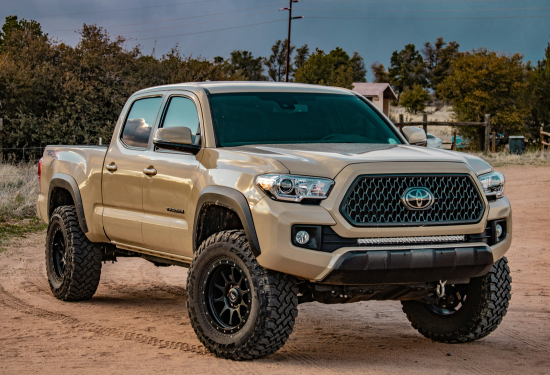
Chevrolet Silverado models make sense for businesses that need a vehicle capable of switching roles throughout the week. Contractors can haul building materials during the day, tow equipment when necessary, and still have passenger seating depending on the cab configuration.
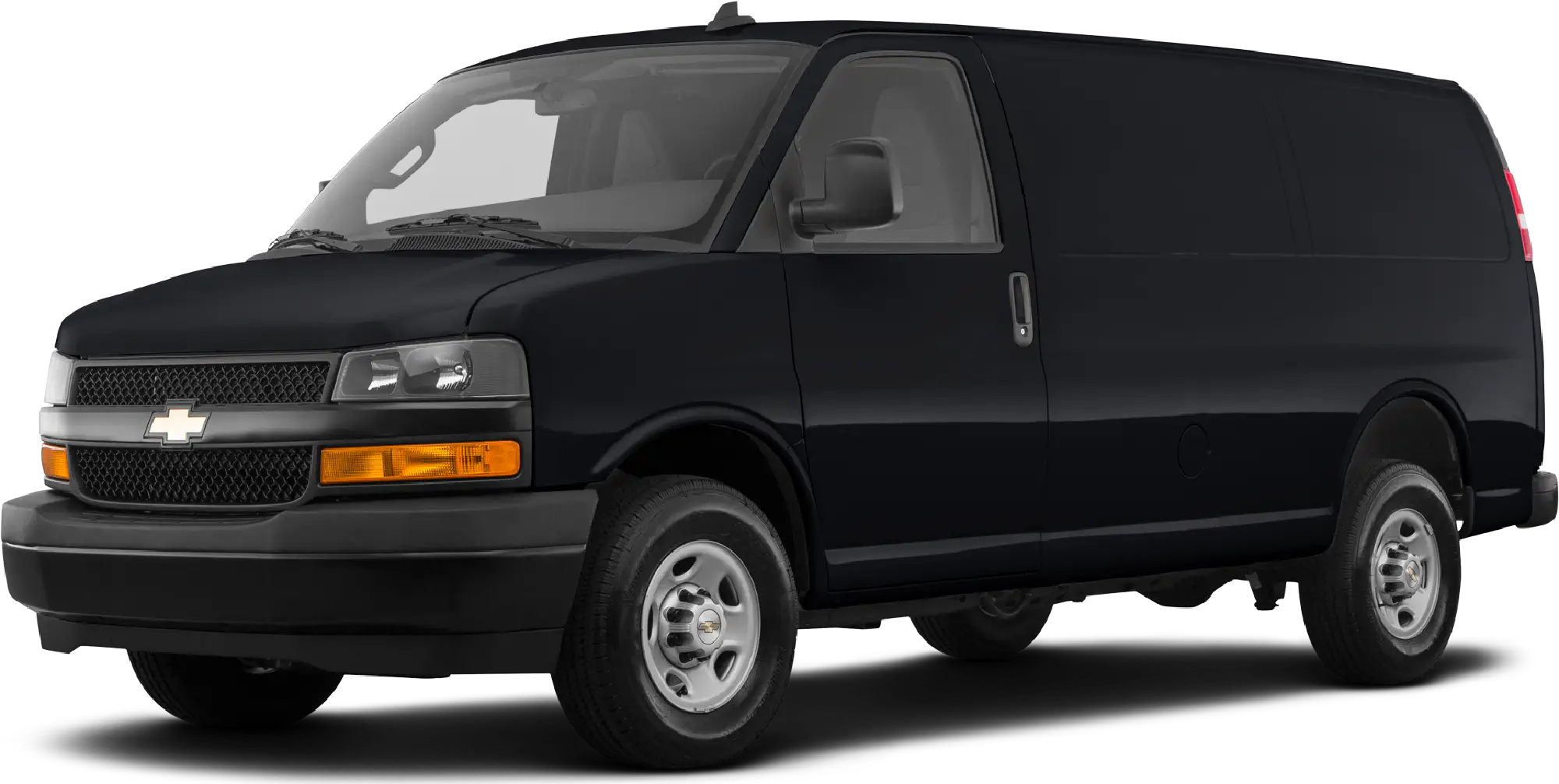
An Express Cargo Van is more specialized. Its enclosed cargo area makes it particularly useful for electricians, plumbers, HVAC technicians, delivery businesses, mobile repair services, and companies carrying tools or inventory that should remain protected from weather and less visible when parked.
That distinction should be the starting point of the buying decision. A Silverado is generally the more versatile vehicle, while the Express can provide a more purpose-built workspace.
| Business Requirement | Chevrolet Silverado | Chevrolet Express Cargo Van |
|---|---|---|
| Enclosed cargo protection | Limited without bed accessories | Excellent |
| Towing flexibility | Excellent when properly equipped | Good, configuration dependent |
| Large or unusually shaped loads | Excellent | Limited by interior dimensions |
| Tool and inventory organization | Good with aftermarket storage | Excellent with shelving and bins |
| Passenger flexibility | Excellent with crew cab configurations | Primarily work focused |
| Weather protection for cargo | Requires tonneau cover or cap | Built in |
| Everyday personal use | Excellent | Fair |
| Mobile workshop potential | Good | Excellent |
Silverado’s biggest advantage is flexibility. An open pickup bed allows equipment, landscaping materials, construction supplies, appliances, and oversized items to be loaded without being constrained by a fixed cargo roof.
Towing is another important consideration. Businesses pulling equipment trailers, landscaping trailers, construction machinery, or recreational equipment may find a properly configured Silverado better suited to the job.
Express takes the opposite approach. Instead of maximizing versatility, it gives businesses a large enclosed area that can be converted into an organized mobile workspace.
Shelving, partitions, racks, bins, and tool-storage systems can transform the cargo compartment into something resembling a rolling shop. Workers can access tools from inside the vehicle without unloading the entire cargo area.
Security also matters. Tools sitting in an exposed pickup bed can attract attention, while an enclosed van keeps expensive equipment out of direct sight. A pickup cap or secure tonneau cover can narrow that advantage, although those additions increase the cost of configuring the Silverado.
For many businesses, vehicle size and parking conditions matter just as much. Owners working in residential neighborhoods, parking garages, crowded job sites, or urban areas should compare vehicle dimensions and maneuverability before committing to either platform.
Purchase price is only one component of commercial vehicle ownership. Small businesses should also budget for scheduled maintenance, tires, brakes, unexpected repairs, fuel, insurance, accessories, and the financial impact of downtime.
Routine maintenance expenses vary considerably by engine, drivetrain, wheel and tire package, location, labor rate, and how aggressively the vehicle is used. Commercial service can accelerate wear because vehicles may spend more time idling, towing, carrying heavy loads, or operating in stop-and-go traffic.
A basic professional diagnostic appointment may cost roughly $100 to $200 or more before repairs begin. Brake work can range from several hundred dollars for a straightforward axle service to considerably more when rotors, calipers, or other components need replacement.
Tires can also become a significant expense. A set of four quality truck or commercial-van tires can easily approach or exceed $1,000 depending on size, load rating, brand, and installation charges.
More complicated drivetrain, air-conditioning, emissions, electrical, transmission, or engine repairs can move into the thousands. Exact pricing varies substantially, so businesses should obtain a written diagnosis and estimate before approving major repairs.
| Ownership Expense | Typical Cost Consideration |
|---|---|
| Diagnostic inspection | Often about $100 to $200+ |
| Oil and filter service | Varies by engine and oil capacity |
| Brake service | Several hundred dollars or more |
| Four replacement tires | Often near or above $1,000 for commercial-grade applications |
| Major drivetrain repair | Potentially several thousand dollars |
| Vehicle downtime | Lost productivity can exceed the repair bill itself |
For a business vehicle, downtime deserves special attention. A $1,500 repair is frustrating for a personal vehicle, but the financial effect can be much larger when the disabled vehicle prevents a technician from reaching customers or equipment from arriving at a job site.
Preventive maintenance is especially important when a Chevrolet is being used commercially. Follow Chevrolet’s maintenance recommendations for the specific model, engine, drivetrain, mileage, and operating conditions rather than relying on a generic service schedule.
Vehicles regularly towing or carrying substantial payloads deserve particularly close attention. Fluids, brakes, tires, cooling-system components, suspension parts, and driveline components operate under greater stress when a truck or van spends its life heavily loaded.
Tire pressure and load ratings should never be treated casually. Underinflated or overloaded tires can affect handling, tire life, fuel consumption, and safety.
Business owners should also keep detailed maintenance records. Good documentation makes it easier to monitor recurring expenses, demonstrate proper maintenance, evaluate vehicle replacement timing, and provide records if a warranty claim requires evidence of maintenance.
Drivers can play an important role as well. Employees should be encouraged to report warning lights, unusual noises, fluid leaks, vibration, shifting changes, braking changes, and overheating immediately instead of waiting for the next scheduled service.
Technical Service Bulletins, commonly called TSBs, are communications manufacturers use to provide technicians with diagnostic information, repair procedures, or guidance concerning known vehicle conditions. A TSB is not automatically the same thing as a recall, and owners can research TSB information by vehicle through the National Highway Traffic Safety Administration rather than relying on isolated bulletin numbers found in online discussions.
For businesses regularly hauling oversized materials or towing trailers, Silverado is usually the more natural choice. Construction firms, landscapers, property-maintenance companies, agricultural operations, and businesses that need a truck during work hours and a conventional passenger vehicle afterward may benefit most from its flexibility.
Express makes a compelling case when enclosed cargo volume and organization matter more than an open bed. Electricians, plumbers, HVAC businesses, mobile technicians, delivery operators, and service companies can build shelving and storage around their exact workflow.
Consider how the vehicle will spend 80 percent of its working life rather than focusing on occasional jobs. Buying a Silverado because you might tow twice a year makes less sense if your business carries thousands of dollars in tools every day.
Likewise, choosing a cargo van solely for enclosed storage can create compromises if your company frequently transports tall, dirty, bulky, or irregularly shaped materials.
Small businesses should also consider future growth. Today’s one-person operation may eventually need additional employees, heavier equipment, or a different service territory. Choosing a work vehicle with some extra capability can postpone the expense and disruption of replacing it prematurely.
Neither vehicle is automatically the better long-term financial decision. The better choice is the one that performs the required work efficiently without forcing the business to pay for capability it rarely uses.
Business owners planning to keep a work vehicle well beyond its original warranty period should think about repair exposure before the factory coverage expires. Modern trucks and vans contain numerous mechanical, electronic, emissions, comfort, and safety systems, and certain covered failures can become expensive as mileage accumulates.
Extended coverage does not replace proper maintenance, and service contracts have exclusions, eligibility requirements, deductibles, and specific terms that should be reviewed before purchase. Wear items and routine maintenance generally should not be assumed to be covered simply because a vehicle has an extended protection plan.
Owners interested in protecting a qualifying Chevrolet against certain covered repair costs can explore options through Granger Warranty. Comparing coverage while the vehicle is still relatively new can make it easier to incorporate protection into the company’s long-term vehicle budget.
Silverado generally works better for contractors carrying oversized materials, towing equipment, or moving loads that are easier to access from an open bed. Express can be better for electricians, plumbers, HVAC technicians, and other trades that benefit from secure interior shelving and an enclosed mobile workspace.
Express Cargo Van has an inherent advantage because tools can remain inside an enclosed cargo compartment and out of direct sight. Silverado owners can improve cargo protection with lockable toolboxes, tonneau covers, bed caps, and other storage equipment.
For many owners, yes. Silverado can function as a towing vehicle, cargo hauler, crew vehicle, and personal truck, depending on its configuration.
Express is more specialized around enclosed commercial cargo. That specialization can actually make it the more productive vehicle when a business needs organized interior storage every day.
A properly equipped Silverado is generally the stronger choice when towing is a primary business requirement, but capabilities vary significantly by model, engine, drivetrain, axle ratio, cab, bed, and equipment package. Owners should verify the exact vehicle’s ratings before purchasing or attaching a trailer.
Payload deserves equal attention because passengers, tools, accessories, and cargo all contribute to vehicle loading.
Eligible extended coverage may help reduce exposure to certain covered mechanical or electrical repair expenses after applicable original warranty coverage ends. Coverage varies by plan and vehicle eligibility, so business owners should review the contract carefully and confirm how commercial use affects eligibility before purchasing.
Granger Warranty can provide information about available coverage and help owners determine which options apply to their Chevrolet.
Silverado and Express solve different business problems. Silverado is the better all-around tool for owners who value towing, an open cargo bed, passenger flexibility, and mixed personal and commercial use, while Express is difficult to beat when secure enclosed storage and mobile-workspace organization are the priorities.
Whichever Chevrolet fits the operation, long-term repair costs should be considered alongside purchase price, fuel, maintenance, insurance, and vehicle downtime. Business owners planning to keep an eligible vehicle beyond its original warranty period can visit Granger Warranty to compare available coverage, pricing, eligibility, and plan terms before deciding whether extended protection makes sense for their ownership strategy.
Stay up to date with the latest news from Granger Warranty