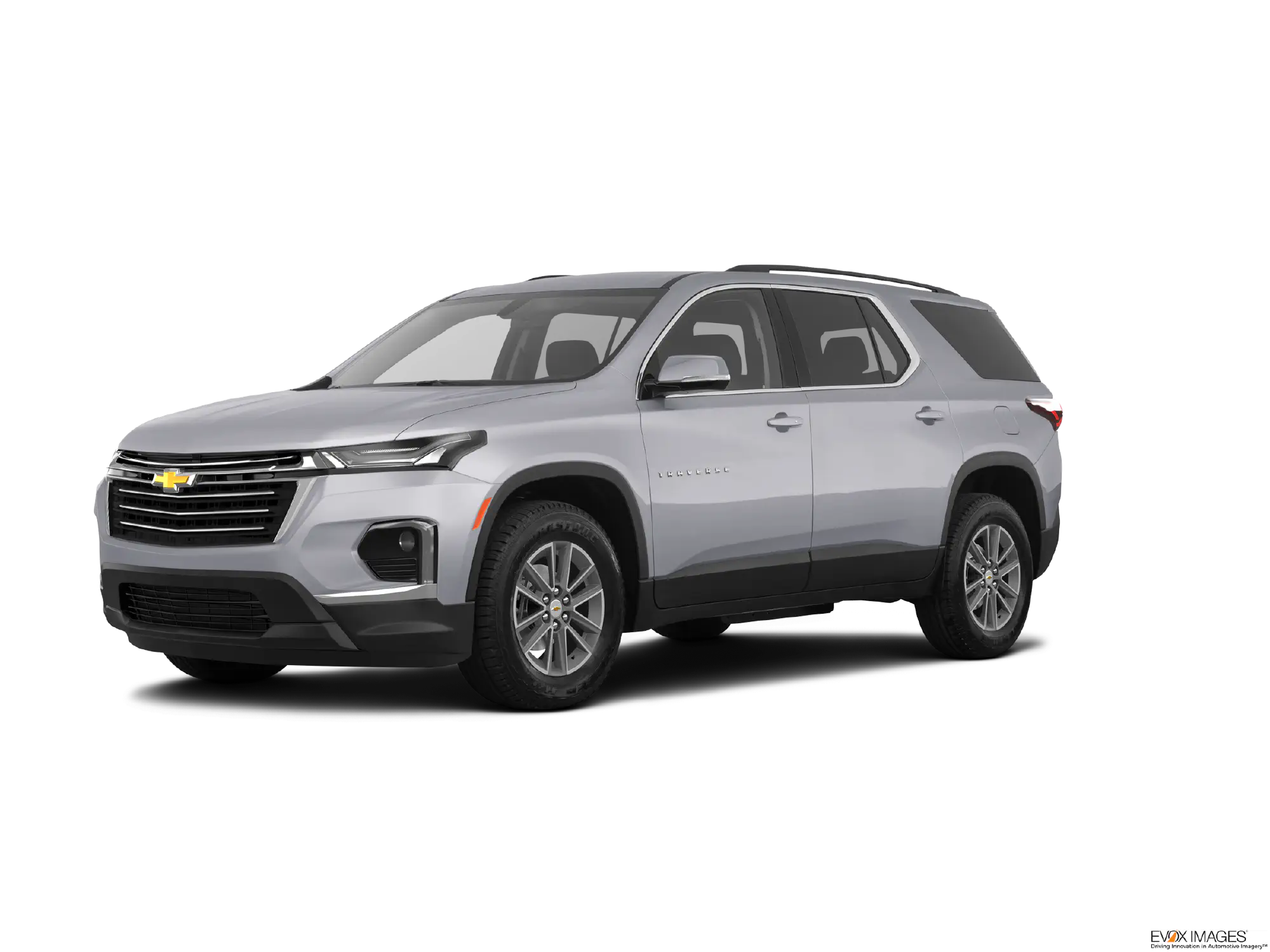
Best Chevrolet SUV for a Growing Family: Traverse vs Tahoe
Growing families often reach a point where a compact crossover simply stops being enough. Car seats get wider, kids bring more gear, road trips require more luggage, and suddenly third-row space and cargo capacity matter as much as fuel economy or styling.
For Chevrolet shoppers, that usually puts two SUVs near the top of the list: the Traverse and Tahoe. A Chevy Traverse vs Tahoe family SUV comparison is especially useful because both offer three-row seating, yet they approach family transportation from very different directions.
The Traverse is a large three-row crossover designed around passenger space, everyday usability, and relatively efficient packaging. The Tahoe is a traditional full-size SUV with truck-based construction, substantially greater towing capability, and the kind of size that works well for families whose weekends include trailers, boats, or substantial amounts of cargo.
Choosing between them comes down to more than asking which Chevrolet SUV is bigger. Families should consider how they will use the vehicle every day, what ownership costs they can comfortably absorb, and whether Tahoe capability is worth the additional expense.
The fundamental difference between the Traverse and Tahoe starts underneath the body. The Traverse uses crossover-style unibody construction, while the Tahoe is a body-on-frame SUV with engineering intended to accommodate heavier-duty use.
That distinction affects nearly everything about the ownership experience. Traverse drivers generally get a vehicle that feels more crossover-like around town, while Tahoe owners gain the capability associated with a full-size SUV.
| Family Consideration | Chevrolet Traverse | Chevrolet Tahoe |
|---|---|---|
| Vehicle Type | Three-row crossover SUV | Full-size body-on-frame SUV |
| Best Fit | Everyday family transportation | Families needing maximum capability |
| Third Row | Family-friendly three-row layout | Spacious three-row layout |
| City Driving | Easier to maneuver | Larger footprint requires more space |
| Towing | Suitable for lighter family towing when properly equipped | Better suited to heavier towing when properly equipped |
| Fuel Costs | Generally lower | Generally higher |
| Purchase Price | Typically more affordable | Typically more expensive |
| Long-Term Repair Exposure | Moderate | Potentially higher due to added systems and capability |
Specifications vary by model year, trim, drivetrain, and equipment, so shoppers should verify exact seating, payload, towing, and cargo figures for the vehicle they are considering.
For families primarily commuting to work, driving children to school, visiting relatives, and taking vacations, the Traverse delivers a lot of usable SUV without stepping into full-size ownership costs.
Tahoe capability starts making considerably more sense when towing and payload enter the equation.
Daily family use is where the Traverse can make its strongest case. A family vehicle may spend far more time navigating school parking lots, grocery-store spaces, garages, and suburban streets than towing a trailer.
The Traverse provides three-row practicality while remaining more approachable than a full-size SUV. That difference can become especially noticeable for a driver transitioning from a sedan or smaller crossover.
Tahoe dimensions create advantages of their own. Families regularly carrying several passengers can appreciate the generous cabin, while the full-size platform provides the substantial feel many SUV buyers prefer.
Parents should also look beyond the number of seats. Bring the actual child seats or boosters during a test drive, check access to the third row, and see how much cargo room remains when every required seating position is occupied.
A three-row SUV can look enormous on a specification sheet but feel much smaller once a stroller, sports bags, groceries, and several passengers are loaded.
Purchase price is only the first financial difference between these Chevrolet SUVs. Fuel, tires, brakes, maintenance, insurance, and eventual repairs can all influence what a family actually spends over several years.
Traverse ownership will generally be the more economical proposition. Its crossover architecture and smaller overall footprint can translate into lower operating expenses compared with a full-size Tahoe, although individual costs vary substantially by model year and configuration.
Tahoe owners should budget for full-size SUV expenses. Larger tires and brakes can cost more to replace, and vehicles equipped with sophisticated suspension, four-wheel-drive, electronic, climate-control, and driver-assistance systems can become expensive to diagnose or repair as they age.
Approximate out-of-pocket repair expenses can vary widely:
| Repair Category | Approximate Cost Range |
|---|---|
| Diagnostic Inspection | $100-$250+ |
| Battery or Charging-System Repair | $200-$1,000+ |
| HVAC Repair | $300-$2,000+ |
| Infotainment/Electrical Repair | $200-$2,500+ |
| Suspension Repair | $500-$3,000+ |
| Transmission-Related Repair | $1,000-$6,000+ |
| Major Engine Repair | $2,500-$10,000+ |
These figures are broad estimates rather than quotes. Labor rates, vehicle age, drivetrain, parts requirements, geographic location, and the exact failure can push an actual bill below or above these ranges.
This is also why comparing SUVs solely on monthly payments can be misleading. Families planning to keep a vehicle well beyond its original warranty period should consider long-term repair exposure as part of the purchase decision.
Neither SUV should be treated as maintenance-free simply because it is relatively new. Following Chevrolet’s maintenance schedule for the specific model year is one of the simplest ways to reduce avoidable problems.
Engine oil and filter changes deserve particular attention, especially for vehicles subjected to frequent short trips, heavy traffic, extreme temperatures, or towing. Owners should also monitor cooling-system condition, transmission performance, brake wear, tires, battery health, and fluid levels.
Tahoe owners who tow should pay close attention to severe-duty maintenance recommendations. Towing increases demands on the engine, transmission, cooling system, brakes, and tires, making preventive maintenance especially important.
Traverse owners should not ignore maintenance simply because their SUV sees lighter duty. Stop-and-go school runs and repeated short journeys can still qualify as demanding operating conditions.
Service records are worth keeping as well. Documentation can make diagnosing recurring concerns easier and gives a future buyer a clearer picture of how the SUV was maintained.
A Technical Service Bulletin, commonly called a TSB, is information issued by an automaker to help technicians diagnose or repair a known condition. A TSB is not automatically a recall, and the existence of a bulletin does not necessarily mean every vehicle covered by its model-year range will develop the problem.
Owners researching a Traverse or Tahoe can search for manufacturer communications and TSB information through the National Highway Traffic Safety Administration. Searching by VIN or vehicle information can help owners investigate recalls, complaints, and manufacturer communications without relying solely on forum discussions.
TSBs can be particularly useful when researching a used SUV. They provide additional context about issues technicians may encounter and the procedures developed to address them.
Reliability should be considered, but fear of a hypothetical repair should not determine the entire purchase. Vehicle condition, maintenance history, model year, mileage, drivetrain, equipment, and previous use can matter as much as the badge on the liftgate.
A well-maintained Traverse can be an excellent choice for a family that wants three rows without full-size SUV operating costs. A Tahoe can be equally compelling when its additional towing capacity, passenger space, and heavy-duty capability will actually be used.
Used shoppers should arrange a pre-purchase inspection whenever possible. Diagnostic scans, fluid inspections, tire condition, suspension noises, leaks, service records, and evidence of previous collision damage deserve attention before purchase.
Buyers should also check the VIN for outstanding safety recalls using the NHTSA recall database. Recalls and warranty coverage are separate issues, so confirming both before buying can prevent confusion later.
For many growing families, the Traverse represents the practical sweet spot. It offers three rows, generous passenger flexibility, and a more manageable footprint without forcing owners to pay for capability they may rarely use.
Tahoe becomes the stronger choice when the family’s lifestyle genuinely demands more. Regular towing, larger recreational equipment, substantial passenger loads, or simply a preference for a traditional full-size SUV can justify its higher purchase and operating costs.
Think about your busiest day rather than your easiest one. If the vehicle needs to accommodate three children, grandparents, sports equipment, and vacation luggage several times each year, evaluate both SUVs in that configuration.
Towing deserves the same realistic approach. Buying Tahoe capability can be worthwhile when a boat or camper is part of the family’s routine, but families that rarely tow may find the Traverse easier and less expensive to live with.
Warranty planning becomes more relevant when a family intends to keep an SUV for many years. Modern Chevrolet SUVs combine mechanical components with cameras, sensors, infotainment hardware, electronic control modules, climate systems, and other technology that can become costly when repairs fall outside the original warranty.
Before purchasing extended coverage, read the contract carefully. Pay attention to covered components, exclusions, deductible requirements, term and mileage limits, cancellation provisions, transferability, and where covered repairs can be performed.
Granger Warranty provides extended vehicle protection options with straightforward online pricing. For families comparing long-term ownership costs, reviewing coverage before the original warranty expires can help clarify how much financial exposure they are comfortable retaining themselves.
Coverage should still be evaluated based on the actual contract rather than assumptions. No extended warranty eliminates routine maintenance expenses or guarantees that every possible vehicle problem will qualify as a covered repair.
For many families of five, the Traverse offers the better balance of passenger space, three-row versatility, and everyday operating costs. Tahoe may be worth the additional expense when towing, heavier loads, or full-size SUV capability are regular requirements.
Many drivers will find the Traverse easier to maneuver because it does not have the same full-size footprint as the Tahoe. Parking garages, school pickup lanes, and crowded parking lots are situations where that difference can matter.
Tahoe is the better choice for families with substantial towing requirements. Exact ratings depend on model year, engine, drivetrain, equipment, and trailer configuration, so always verify the specific vehicle’s rating before towing.
Traverse will generally have the advantage when purchase price, fuel consumption, tires, and other routine expenses are considered. Tahoe’s added capability comes with the operating costs expected from a larger, heavier full-size SUV.
Extended coverage can make sense for families planning to keep either SUV beyond its original warranty, particularly when an unexpected multi-thousand-dollar repair would disrupt the household budget. Compare contract terms, exclusions, deductibles, mileage limits, and covered components before deciding.
Choosing between the Traverse and Tahoe ultimately depends on how much SUV your family actually needs. Traverse is likely to be the better value for everyday three-row transportation, while Tahoe earns its higher cost when towing, heavier-duty capability, and full-size space are genuine priorities.
Whichever Chevrolet fits your driveway, consider the ownership picture beyond the purchase price. Maintenance, repairs, technology, and years of family use all affect the true cost of keeping an SUV.
Families planning long-term ownership can explore Granger Warranty coverage options and compare available protection with the cost of paying for eligible repairs out of pocket. The best time to consider that decision is before an expensive repair turns it into an urgent one.
Stay up to date with the latest news from Granger Warranty