Best Chevrolet Truck for Towing: Silverado 1500 vs 2500HD
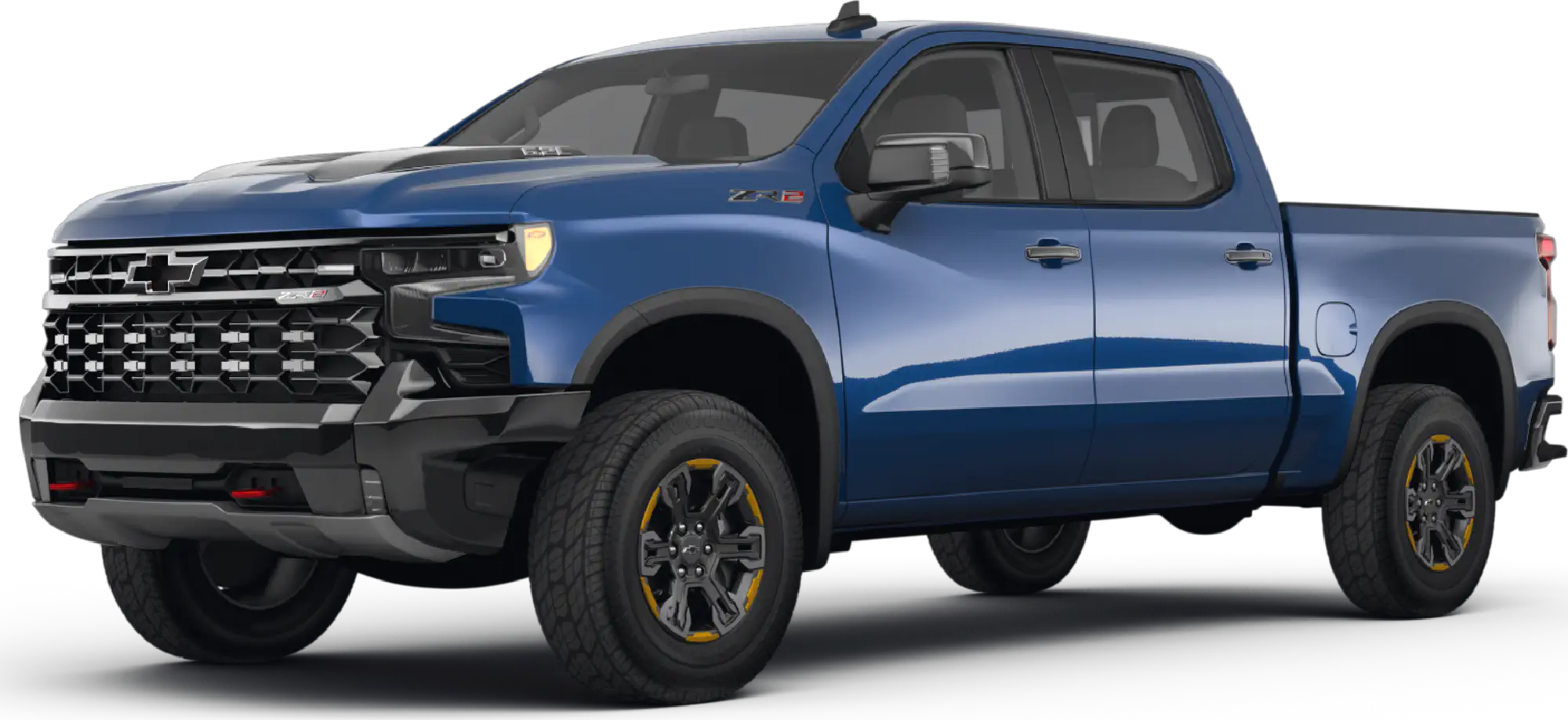
Picking between a Chevrolet Silverado 1500 and Silverado 2500HD often comes down to one question: how much trailer do you actually plan to pull?
Both trucks can handle serious towing jobs, but their capabilities, payload limits, powertrains, operating costs, and everyday driving characteristics put them in distinctly different categories.
For most recreational towing, a properly configured Silverado 1500 offers an appealing balance of capability and daily usability. Drivers pulling larger travel trailers, equipment trailers, fifth wheels, or heavy loads regularly may find the Silverado 2500HD’s additional capacity and heavier-duty chassis worth the extra cost.
Looking beyond the advertised maximum Chevy Silverado towing capacity is important. Payload, tongue weight, passenger weight, hitch configuration, axle ratings, and the truck’s exact equipment can determine whether a particular Silverado is appropriate for your trailer.
Current Silverado trucks cover an unusually broad towing spectrum. For the 2026 model year, Chevrolet lists a maximum available towing capacity of 13,300 pounds for the Silverado 1500 when properly equipped.
Silverado 2500HD moves into heavy-duty territory. Chevrolet’s 2026 trailering information shows certain 2500HD configurations exceeding 20,000 pounds of fifth-wheel or gooseneck capability, with a maximum Crew Cab towing figure of 22,070 pounds. Exact ratings vary considerably by cab, bed, drivetrain, engine, wheel, GVWR, and hitch configuration.
| Towing Consideration | Silverado 1500 | Silverado 2500HD |
|---|---|---|
| Truck Class | Light-duty | Heavy-duty |
| Maximum Available Towing | Up to 13,300 lbs. | Over 20,000 lbs. in select 2500HD configurations |
| Best Use | Boats, utility trailers, many travel trailers | Large campers, equipment, fifth wheels, frequent heavy towing |
| Available Diesel | 3.0L Duramax I-6 | 6.6L Duramax V8 |
| Daily Driving | Generally easier | Larger and heavier |
| Heavy-Towing Margin | Moderate to high depending on configuration | Substantially greater |
| Ownership Costs | Generally lower | Generally higher |
Those maximum figures should never be treated as universal ratings for every Silverado on a dealer lot. Chevrolet’s own towing charts show substantial differences between configurations.
Always verify the ratings for the specific truck rather than shopping solely from a model’s advertised maximum.
One of the biggest mistakes truck shoppers make is assuming towing capacity answers every towing question.
It doesn’t.
Payload can become the limiting factor before maximum trailer weight does, especially on a half-ton pickup carrying several passengers and substantial cargo. Trailer tongue weight pushes down on the truck and counts toward the load the vehicle must carry.
Consider a travel trailer weighing 9,000 pounds loaded for a trip. At 12 percent tongue weight, roughly 1,080 pounds is being applied to the truck before accounting for passengers, cargo, accessories, and certain hitch equipment.
That can consume a significant portion of a half-ton truck’s available payload.
A Silverado 2500HD generally provides more capacity for these combined loads, which is one reason an HD truck can feel more appropriate even when the trailer technically falls below the maximum Chevy Silverado towing capacity of certain Silverado 1500 configurations.
GCWR, or Gross Combination Weight Rating, matters too. It represents the permitted combined weight of the truck and trailer, including occupants, fuel, equipment, and cargo. Chevrolet publishes configuration-specific GCWR and trailer ratings in its trailering charts.
Silverado 1500 buyers have several powertrain choices.
For 2026, Chevrolet lists a TurboMax four-cylinder producing 310 horsepower and 430 lb-ft of torque, a 5.3-liter V8 producing 355 horsepower and 383 lb-ft, and a 6.2-liter V8 producing 420 horsepower and 460 lb-ft.
The available 3.0-liter Duramax turbo-diesel is especially interesting for drivers who tow regularly. Chevrolet rates it at 305 horsepower and 495 lb-ft of torque and lists available towing capability up to 13,300 pounds.
| Silverado 1500 Engine | Horsepower | Torque | Towing Character |
|---|---|---|---|
| TurboMax | 310 hp | 430 lb-ft | Strong torque for lighter and moderate towing |
| 5.3L V8 | 355 hp | 383 lb-ft | Traditional V8 all-around option |
| 6.2L V8 | 420 hp | 460 lb-ft | Strong gasoline performance |
| 3.0L Duramax | 305 hp | 495 lb-ft | Excellent low-speed torque and long-distance towing potential |
Engine choice is only one piece of the puzzle. Chevrolet’s 2026 towing charts show, for example, Silverado 1500 configurations ranging from below 10,000 pounds to more than 13,000 pounds depending on powertrain and equipment.
Moving to the Silverado 2500HD changes more than the engine.
Heavy-duty pickups are engineered around heavier loads, with chassis, suspension, cooling, axle, braking, and drivetrain components designed for demanding work. That additional capability can be valuable for owners who routinely tow rather than simply hooking up a trailer a few weekends per year.
Chevrolet offers the 2500HD with a 6.6-liter gasoline V8 or available 6.6-liter Duramax turbo-diesel V8. The Duramax produces 470 horsepower and 975 lb-ft of torque and is paired with a 10-speed Allison automatic transmission.
That 975 lb-ft figure illustrates why diesel HD pickups remain popular with owners pulling large campers and equipment trailers.
The benefit is not simply getting the trailer moving. Greater capacity can provide additional operating margin when climbing grades, merging into traffic, carrying significant pin or tongue weight, or towing frequently.
Heavy towing increases demands on multiple vehicle systems regardless of which Silverado you choose.
Transmission temperatures can rise, brakes work harder, tires carry additional weight, and suspension and driveline components experience increased loads. These factors become especially important as trucks accumulate mileage.
Actual repair prices vary significantly by model year, powertrain, region, parts selection, and labor rates, but owners should budget for the possibility of four-figure repairs as a towing vehicle ages.
| Towing-Related Service Or Repair | Approximate Cost Range |
|---|---|
| Brake Pads And Rotors | $500 to $1,500+ |
| Wheel Bearing/Hub Repair | $400 to $900+ per corner |
| Cooling System Repair | $300 to $1,500+ |
| Suspension/Steering Repairs | $500 to $2,500+ |
| Differential Repair | $1,000 to $3,000+ |
| Major Transmission Repair/Replacement | $4,000 to $8,000+ |
| Diesel Emissions/Fuel-System Repair | $1,000 to several thousand dollars |
These figures are broad budgeting estimates rather than quotes. Diagnosis can also add expense because modern towing problems may involve mechanical, electronic, emissions, cooling, or trailer-control systems.
Heavy-duty does not necessarily mean inexpensive to repair. A 2500HD’s larger and more specialized components can cost more to replace, even though the truck provides considerably more capability.
Maintenance becomes particularly important when a truck spends significant time pulling a trailer.
Follow Chevrolet’s maintenance recommendations for the vehicle and pay attention to severe-service guidance when applicable. Engine oil, transmission fluid, coolant, differential fluid, transfer-case fluid on four-wheel-drive trucks, brakes, and tires all deserve additional attention when towing frequently.
Check tire pressure before long towing trips and inspect both truck and trailer tires for unusual wear. Trailer tires are frequently overlooked even though a failure can quickly turn an otherwise routine trip into a roadside problem.
Trailer brakes should also be inspected and adjusted as required. An integrated trailer brake controller can help coordinate braking, but it cannot compensate for worn or improperly maintained trailer brakes.
Drivers should also watch the truck’s temperature information while towing. Persistent abnormal engine or transmission temperatures deserve investigation rather than simply being accepted as a normal consequence of pulling a trailer.
A Technical Service Bulletin, commonly called a TSB, is a manufacturer communication that can provide technicians with diagnostic information, updated procedures, or repair guidance for known vehicle concerns. A TSB is not automatically the same thing as a safety recall, and its existence does not necessarily mean a repair will be performed free of charge.
Silverado owners researching a towing, transmission, engine, electrical, or trailering-system concern can search manufacturer communications through the NHTSA recall and vehicle database. NHTSA states that manufacturers submit notices, bulletins, warranty and policy extensions, and other communications involving vehicle defects, failures, malfunctions, and performance concerns.
Searching by model year, make, and model can help owners identify bulletins that may relate to symptoms they are experiencing.
Maximum towing capacity should be a starting point, not the entire decision.
A Silverado 1500 makes sense for many owners pulling boats, utility trailers, enclosed trailers, and moderate-size campers. It provides meaningful towing capability without requiring buyers to live with the size, weight, and potentially higher operating costs of an HD truck every day.
Silverado 2500HD becomes increasingly attractive when trailers get heavier, tongue or pin weight climbs, or towing becomes frequent. Owners pulling large travel trailers, fifth wheels, construction equipment, or heavy commercial loads may appreciate having more truck than the minimum specification requires.
Frequency matters as much as weight.
Pulling an 8,000-pound trailer several times per year is a different use case from pulling one several times per week. Even if both situations fit within a properly equipped Silverado 1500’s ratings, the second owner may reasonably prefer the additional capacity of a 2500HD.
For occasional recreational towing, the Silverado 1500 is likely the better all-around truck for many buyers.
It is easier to use as a daily vehicle while still offering up to 13,300 pounds of maximum available towing capacity in the proper configuration. Buyers should pay particularly close attention to payload and the exact trailering equipment installed on the truck.
For frequent towing or heavier trailers, the 2500HD has the advantage.
Its heavier-duty construction and substantially greater towing capability provide additional headroom. That difference becomes more meaningful as trailer weights approach the upper limits of what a half-ton can comfortably accommodate.
A practical guideline is to buy based on the trailer’s loaded weight rather than its advertised dry weight. Account for water, propane, batteries, camping gear, tools, equipment, passengers, and everything else that accompanies the trailer.
Towing places additional demands on expensive truck components, which makes long-term repair planning particularly relevant for owners who intend to keep their Silverado beyond its original warranty period.
An extended vehicle protection plan can help make certain covered repair costs more predictable. Coverage terms, exclusions, deductibles, eligibility requirements, and covered components should always be reviewed before purchasing any plan.
Granger Warranty offers vehicle protection options for owners who want to evaluate extended coverage as part of their long-term ownership strategy. Silverado owners can compare available coverage and pricing at Granger Warranty rather than waiting until the truck is approaching higher mileage to consider future repair exposure.
For 2026, Chevrolet lists a maximum available Silverado 1500 towing capacity of 13,300 pounds when properly equipped. The Silverado 2500HD can exceed 20,000 pounds in certain fifth-wheel and gooseneck configurations, so the correct figure depends on the exact truck configuration and hitch type.
Yes, a properly equipped Silverado 1500 can be an excellent travel-trailer tow vehicle. Buyers need to compare loaded trailer weight and tongue weight with the specific truck’s towing, payload, axle, and GCWR limits rather than relying solely on Chevrolet’s maximum advertised rating.
Not necessarily, because many properly configured Silverado 1500 models are capable of towing an 8,000-pound trailer. A 2500HD may still provide more payload and operating margin, making it attractive for frequent towing, heavier tongue weights, mountainous travel, or trailers carrying substantial cargo.
It depends on the workload. The Silverado 1500’s 3.0-liter Duramax provides 495 lb-ft of torque and up to 13,300 pounds of available towing capability in the proper configuration, while the 2500HD’s available 6.6-liter Duramax produces 975 lb-ft and is better suited to substantially heavier loads.
Regular towing can accelerate wear because the engine, transmission, cooling system, brakes, tires, suspension, and driveline operate under greater loads. Staying within Chevrolet’s weight ratings and following appropriate maintenance intervals can help reduce unnecessary stress.
Choosing between a Silverado 1500 and 2500HD is ultimately about matching the truck to the job. Silverado 1500 provides impressive capability and better everyday versatility for many owners, while Silverado 2500HD offers the additional capacity that frequent and heavy towing demands.
Once you’ve identified the right Chevy Silverado towing capacity for your trailer, consider the long-term cost of owning and maintaining that truck as well. Towing can put expensive components to work regularly, and repair exposure generally increases as mileage accumulates.
Visit Granger Warranty to review available extended coverage options, compare pricing, and determine whether additional protection makes sense for your Silverado and ownership plans.
Stay up to date with the latest news from Granger Warranty