Best GMC for Towing a Camper
Choosing the right GMC for towing a camper is about more than finding the truck with the biggest number on its spec sheet.
Trailer weight, payload, hitch weight, drivetrain, axle configuration, passenger load, and the type of camping you plan to do all affect which GMC is the smartest match.
For many owners, the Best GMC for towing a Camper will be a properly equipped Sierra 1500. Larger travel trailers and fifth wheels can push buyers toward the Sierra 2500HD or 3500HD, where higher capacities and heavy-duty hardware provide considerably more towing headroom.
Camper shopping often begins with a manufacturer’s advertised dry weight. That number is useful, but it should not be the only figure used to choose a tow vehicle.
A camper becomes heavier once propane, batteries, water, food, camping equipment, bicycles, generators, and personal belongings are added. Buyers should pay close attention to the trailer’s GVWR, or Gross Vehicle Weight Rating, because it represents the maximum allowable loaded weight of the trailer.
Tongue or pin weight matters just as much. A truck may have sufficient rated towing capacity for a trailer while running short on available payload after accounting for passengers, cargo, accessories, and the trailer’s hitch weight.
That is why experienced buyers generally leave a comfortable margin rather than selecting a camper that puts the truck at its maximum ratings every weekend.
| GMC Truck | Best Camper Match | Primary Advantage | Main Consideration |
|---|---|---|---|
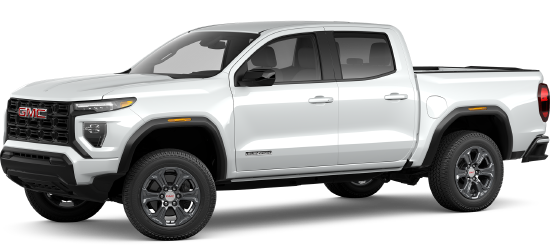
| Canyon | Small lightweight campers | Maneuverability and everyday usability | Lower towing and payload limits |
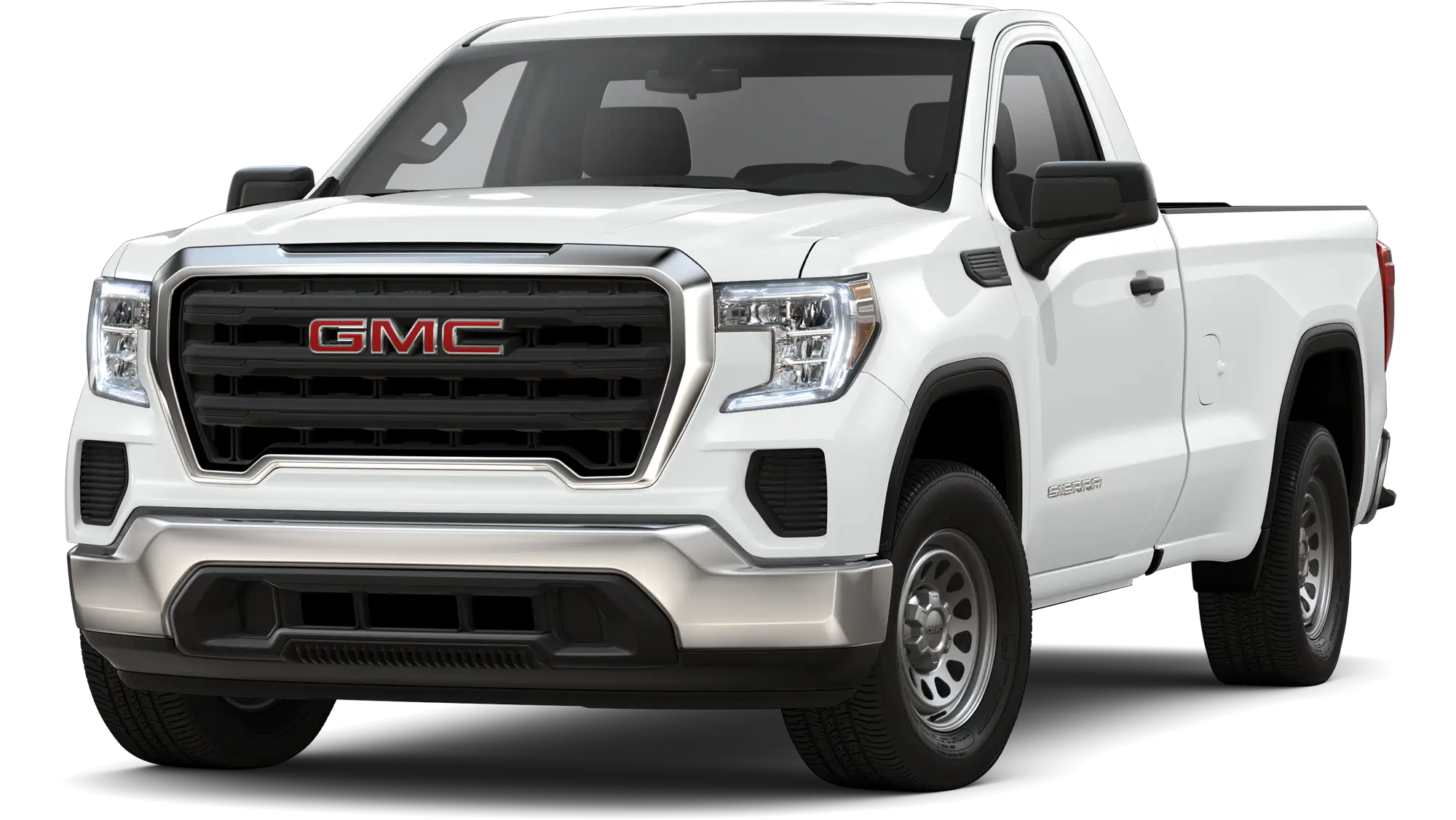
| Sierra 1500 | Small to larger travel trailers | Excellent balance of capability and daily comfort | Configuration greatly affects ratings |
| Sierra 2500HD | Larger travel trailers and many fifth wheels | Heavy-duty chassis and greater towing headroom | Larger and less maneuverable |
| Sierra 3500HD | Large fifth wheels and heavy campers | Maximum GMC pickup capability | Often more truck than smaller campers require |
Exact towing and payload ratings vary significantly by model year, engine, cab, bed, drivetrain, axle ratio, and equipment. Always confirm the individual truck’s ratings and the camper’s loaded specifications before purchasing either vehicle.
A common mistake is comparing only the camper’s dry weight with the truck’s maximum advertised tow rating. Real-world towing involves several interconnected limits.
Payload is particularly important. Imagine adding four passengers, a bed full of camping supplies, a weight-distributing hitch, and several hundred pounds of trailer tongue weight. Those loads all affect how much capacity remains available.
The truck’s Gross Combined Weight Rating, axle ratings, tire ratings, and hitch limitations should also be respected. Staying within every applicable rating is more important than simply staying below the headline towing number.
Aerodynamics matter, too. A tall travel trailer creates substantial wind resistance, so two trailers with similar weights can feel very different behind the same truck.
Crosswinds and passing tractor-trailers can make a larger camper more demanding to control. A heavier-duty truck’s longer wheelbase, chassis, suspension, brakes, and additional mass can make towing a substantial camper feel more settled even when a lighter truck technically has enough rated capacity.
For a compact camper, a GMC Canyon may provide enough capability while remaining easier to park and use as an everyday vehicle. Buyers still need to verify the exact configuration because towing capacity can vary.
The Sierra 1500 is the sweet spot for many travel-trailer owners. It combines meaningful towing capability with the comfort, technology, and drivability expected from a modern half-ton pickup.
Moving to a Sierra 2500HD makes sense when camper size, payload demands, or future trailer upgrades begin pushing the limits of a half-ton. Heavy-duty trucks are especially attractive for owners who tow frequently through mountains, carry substantial cargo, or want additional capacity in reserve.
A Sierra 3500HD becomes relevant for particularly heavy fifth wheels and other demanding RV combinations. Depending on the camper, buyers may also need to consider whether a single-rear-wheel or dual-rear-wheel configuration makes more sense.
| If You Prioritize | GMC To Consider |
|---|---|
| Daily driving plus occasional camper towing | Sierra 1500 |
| Frequent towing with a substantial travel trailer | Sierra 2500HD |
| Larger fifth-wheel capability | Sierra 2500HD or 3500HD |
| Maximum pickup towing and payload capability | Sierra 3500HD |
| Smaller camper and easier maneuverability | Canyon |
These are starting points rather than substitutes for a vehicle-specific towing calculation.
Towing does not automatically damage a properly equipped truck, but it places additional demands on major mechanical systems. Engines work harder, transmissions handle higher loads, cooling systems must shed additional heat, and brakes have more mass to manage.
Repair costs vary considerably by model, engine, diagnosis, labor rates, and whether a component requires repair or replacement. Modern diesel heavy-duty trucks can also contain expensive emissions, fuel-delivery, turbocharger, cooling, and electronic systems.
| Repair Area | Approximate Cost Range |
|---|---|
| Basic towing-related inspection or diagnosis | $150-$300+ |
| Brake service | $400-$1,500+ |
| Cooling-system repair | $300-$1,500+ |
| Transmission-related repair | $500-$3,000+ |
| Major transmission replacement | $4,000-$8,000+ |
| Diesel fuel or emissions-system repair | $500-$5,000+ |
| Major engine repair | $3,000-$10,000+ |
These figures are broad planning estimates, not quotes. Location, vehicle configuration, parts requirements, and the specific failure can move the final bill substantially higher or lower.
Maintenance becomes especially important when a GMC regularly pulls a camper. Owners should follow the maintenance schedule appropriate for their model and operating conditions rather than assuming normal commuting intervals always apply.
Engine oil, transmission fluid, coolant, differential fluid, brakes, tires, and wheel bearings deserve particular attention. Tire pressure should be checked before towing, including the camper’s tires.
Trailer brakes and the brake controller should also be tested before departure. A trailer with poorly functioning brakes places unnecessary demand on the tow vehicle and can significantly affect stopping performance.
Pay attention to temperatures and warning messages while towing. An unusual increase in engine or transmission temperature deserves investigation, especially if it occurs repeatedly on grades or during hot weather.
Correct hitch setup is another important part of towing safely. Travel trailers may require an appropriately selected weight-distributing hitch, while fifth wheels require properly installed bed-mounted hardware and adequate payload capacity.
A Technical Service Bulletin, commonly called a TSB, is information an automaker provides to service professionals about known symptoms, diagnostic procedures, updated parts, or repair methods. A TSB is not automatically a recall, and its existence does not necessarily mean a repair will be performed at no charge.
Owners researching a GMC tow vehicle can look for manufacturer communications and TSB information through the NHTSA vehicle database. Search by the specific model year and vehicle because service information can differ between engines, transmissions, configurations, and production periods.
Not if the truck and camper are properly matched. GMC builds pickups specifically designed to perform demanding towing work, but owners still need to stay within the ratings assigned to their individual vehicle.
Concern becomes more reasonable when a trailer approaches multiple truck limits at once. A combination that barely meets towing capacity but consumes nearly all available payload may not provide the flexibility an owner expects after adding passengers and gear.
Think about tomorrow’s camper as well as today’s. Buying a Sierra 1500 for a lightweight travel trailer makes sense if you expect to stay in that category, while moving to a 2500HD may be worthwhile if a substantially larger camper is likely in a few years.
More capability is not automatically better. A 3500HD used primarily for commuting while towing a modest camper a few weekends each year may sacrifice everyday convenience without delivering a meaningful benefit for that owner.
Frequent towing can make long-term repair planning more important because the truck is being purchased to perform demanding work. Once applicable original warranty coverage ends, an unexpected mechanical or electrical failure can become a significant ownership expense.
An extended vehicle service plan may help reduce exposure to certain covered repairs, but coverage should always be reviewed carefully. Maintenance, wear items, modifications, commercial use, improper loading, and failures resulting from excluded causes may be treated differently depending on the contract.
Granger Warranty offers extended coverage options for eligible vehicles with transparent pricing and an online purchasing process. Owners should review the actual plan terms, exclusions, deductibles, eligibility requirements, and covered components before deciding whether a particular plan fits their truck.
For many travel-trailer owners, the Sierra 1500 provides the strongest combination of towing capability, comfort, and everyday usability. Owners of larger travel trailers or fifth wheels should consider the Sierra 2500HD or 3500HD depending on loaded trailer weight, hitch weight, payload requirements, and the truck’s exact configuration.
It can be. A properly configured Sierra 1500 can be an excellent travel-trailer tow vehicle, but you should compare the camper’s loaded weight and tongue weight against the specific truck’s towing, payload, axle, and hitch ratings.
Do not rely solely on a maximum towing figure advertised for the Sierra 1500 lineup. Your individual truck may have a different rating.
A 2500HD becomes attractive when a larger camper places substantial demands on a half-ton’s payload or towing capacity. It can also make sense for frequent towing, mountain travel, or owners who expect to purchase a heavier camper later.
A Sierra 1500 may remain the better choice when the trailer fits comfortably within its ratings and the truck spends most of its time commuting without a trailer.
Diesel engines can be especially appealing for heavier trailers because strong low-speed torque and towing-oriented power delivery work well under sustained loads. Diesel ownership also brings different maintenance requirements and potentially expensive fuel, emissions, and turbocharger-related components.
Gasoline engines can still be excellent choices, particularly when the camper is lighter or annual towing mileage is relatively low.
There is no universal percentage that works for every truck-and-trailer combination. Rather than focusing exclusively on a predetermined safety margin, verify loaded trailer weight, tongue or pin weight, payload, axle ratings, hitch ratings, tire limits, and Gross Combined Weight Rating.
Having unused capacity can provide useful flexibility for passengers, cargo, changing travel conditions, and future camping equipment.
Selecting the Best GMC for Towing a Camper comes down to matching the truck to the camper rather than buying from a headline towing number. A Sierra 1500 can be ideal for many travel trailers, while the Sierra 2500HD and 3500HD provide additional capability for owners moving into heavier RVs and fifth wheels.
Once you’ve chosen the right GMC, consider the long-term cost of keeping it on the road. Visit Granger Warranty to explore available extended coverage options, compare pricing, and determine whether additional protection makes sense for your GMC and ownership plans.
Stay up to date with the latest news from Granger Warranty